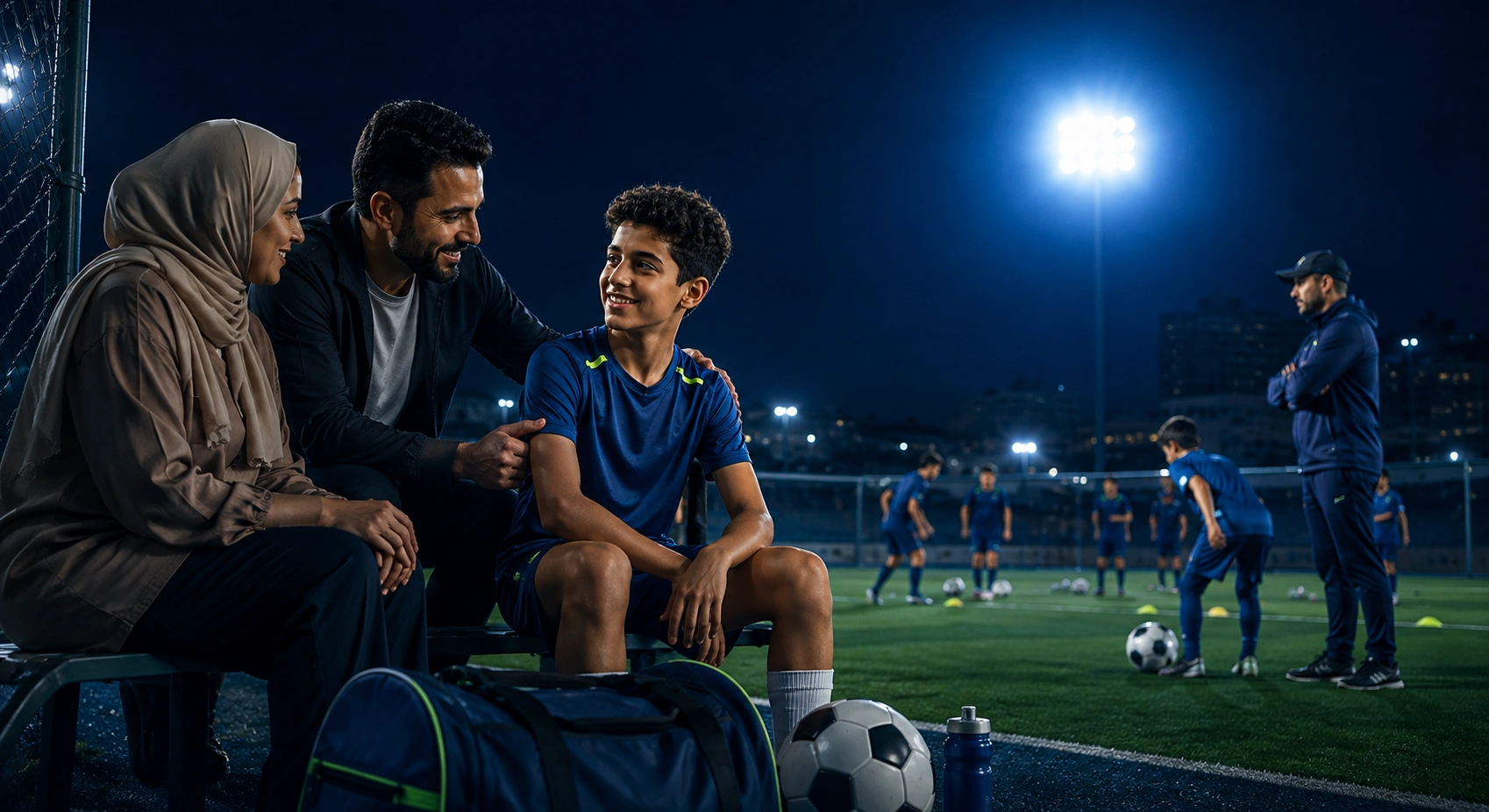
اكتشف طرق عملية تساعدك تدعم رحلة طفلك الرياضية، من بناء الثقة والعادات الصحية لحد التواصل مع المدرب والاحتفال بالتطور، مش بالنتائج بس.
كون طفلك بيلعب رياضة مش معناه بس إنه يكسب بطولات أو يجمع ميداليات.
الرياضة بتعلم الأطفال الانضباط، والعمل الجماعي، والثقة بالنفس، والصبر، وأهمية الاستمرار، والاجتهاد. ورا كل لاعب صغير ناجح، غالبًا بيكون فيه أب أو أم بيدعموه، ويشجعوه، ويساعدوه يفضل منظم ومتحمس.
ودور ولي الأمر مش إنه يبقى مدرب إضافي، لكن إنه يوفر بيئة صحية تشجع الطفل يستمتع بالرياضة، ويطور مهاراته، ويكمل رحلته بثقة. طيب، إزاي تقدر تدعم طفلك بشكل أفضل؟
١. ركز على التطور... مش النتيجة بس
طبيعي جدًا تفرح لما ابنك يكسب مباراة أو بطولة. لكن النجاح مش دايمًا بيكون في الميدالية.
ممكن يكون طور من مستواه، أو حضر كل التمارين، أو حقق رقم شخصي جديد، أو بقي واثق في نفسه أكتر خلال المنافسات. كل دي إنجازات تستحق الاحتفال.
بدل ما يكون أول سؤال بعد كل مباراة:
"كسبت؟" جرب تسأله:
"إيه أكتر حاجة اتعلمتها النهارده؟"
"إيه أكتر حاجة فخور بيها؟"
"حابب تطور إيه المرة الجاية؟"
الأسئلة دي بتخلي الطفل يركز على التعلم والتطور، بدل ما يحس إن قيمته مرتبطة بالفوز بس.
٢. شجعه على الاستمرار والالتزام
الموهبة مهمة، لكن الاستمرار في التدريب هو اللي بيصنع لاعب قوي مع الوقت. المطلوب مش إنك تتحكم في كل تفاصيل يومه، لكن تساعده يبني روتين ثابت. وده ممكن يكون عن طريق:
تذكيره بمواعيد التمرين.
مساعدته يجهز شنطة التمرين قبلها.
تنظيم وقته بين المدرسة، والرياضة، والراحة.
ولما الطفل يتعود ينظم نفسه، هيبقى أكثر اعتمادًا على نفسه في المستقبل.
٣. حافظ على تواصل كويس مع المدرب:
العلاقة الجيدة بين ولي الأمر، والطفل، والمدرب بتفرق جدًا. التعاون بينكم بيساعد في توفير أفضل دعم للطفل.
لو عندك أي سؤال عن مستوى طفلك، أو أهدافه، أو طريقة التدريب، اتكلم مع المدرب بهدوء واحترام. وفي نفس الوقت، مهم نحترم دور المدرب ونسيب له مساحة يقود العملية التدريبية.
٤. ساعد طفلك يكون منظم
اللاعب الصغير غالبًا بيكون عنده جدول مزدحم بين المدرسة، التمارين، البطولات، الأنشطة العائلية. وده ممكن يخليه ينسى مواعيد أو تدريبات. تطبيقات التدريب الرقمية بتسهل الموضوع جدًا، لأنها بتجمع في مكان واحد:
مواعيد التمارين.
البطولات.
الإعلانات.
الأهداف.
تقارير الأداء.
ولما الطفل يعرف برنامجه بوضوح، هيقدر يستعد بشكل أفضل ويتحمل مسؤولية تطوره بنفسه.
٥. احتفل بالمجهود قبل النتيجة
الضغط المستمر على الطفل عشان يكسب كل بطولة ممكن يخليه يفقد متعة الرياضة. الأفضل إنك تحتفل معاه بالمجهود، والالتزام، وروح الفريق، والتطور اللي حققه. خليه يعرف أن قيمته مش مرتبطة بالمركز الأول، لكن بمحاولته المستمرة ورغبته في التعلم. البيئة الإيجابية بتساعد الأطفال يبنوا ثقة أكبر في نفسهم ويستمتعوا بالمنافسة بطريقة صحية.
٦. اديله فرصة يعتمد على نفسه
دعمك لطفلك مهم، لكن ده مش معناه إنك تاخد كل القرارات مكانه. أوقات، أفضل حاجة ممكن تعملها هي إنك تسمعه، وتشجعه، وتسيبه يقود رحلته بنفسه. الأطفال محتاجين يتعلموا يتحملوا المسؤولية، ويجربوا، ويغلطوا، ويتعلموا من أخطائهم.
رحلة الطفل الرياضية هي مجهود فريق كامل. ولي الأمر بيقدم الدعم والتشجيع، والمدرب بيقدم الخبرة والتوجيه، والطفل هو اللي بيبذل المجهود ويستمر في التدريب.
وفي Coachizer، بنساعد المدربين واللاعبين ينظموا التدريبات، ويتواصلوا بسهولة، ويديروا الجداول، ويتابعوا الأداء والتطور من خلال منصة واحدة. لما اللاعب الصغير يلاقي حواليه نظام دعم
قوي، هيقدر يركز على أهم حاجة: يتعلم، ويتطور، ويستمتع بالرياضة اللي بيحبها.
اكتشف Coachizer وشوف إزاي التنظيم الأفضل، والتواصل السهل، ومتابعة التقدم باستمرار ممكن يساعدوا طفلك ياخد خطوته الجاية بثقة أكبر.
Discover practical ways parents can support their children’s sports journey, from building healthy habits and confidence to communicating with coaches and celebrating progress.
Being a young athlete is about much more than winning games or collecting medals.
Sports can teach children discipline, teamwork, confidence, resilience, and the value of consistent effort. But behind many young athletes is a parent who helps them stay motivated, organized, and supported.
The role of a sports parent isn’t to become another coach. It’s to create an environment where children can enjoy their sport, develop their skills, and feel confident enough to keep improving.
So, how can parents better support their children’s sports journey?
1. Focus on Progress, Not Just Results
It’s natural for parents to celebrate a win.
Maybe your child improved their technique, attended every training session, achieved a personal best, or showed greater confidence during a competition. These are all meaningful achievements. But young athletes also need to understand that improvement doesn’t always show up on the scoreboard.
Instead of asking only, “Did you win?” Try asking, "What did you learn today?"
Instead of asking only, “Did you win?” Try asking, "What did you learn today?”
“What are you proud of?”
“What would you like to improve next time?”
These questions help children focus on growth rather than feeling pressured to be perfect.
2. Encourage Consistency
The goal isn’t to control every detail. Parents can support consistency by helping children manage their schedules and create healthy routines.
This may include making sure they know when training sessions take place, helping them prepare their equipment, and balancing sports with school and rest.
Talent can help, but consistent training is what helps athletes develop over time. It gives young athletes the structure they need to become more independent.
3. Communicate With Coaches
Parents should encourage open communication while respecting the coach’s role. A strong relationship between parents, athletes, and coaches can create a better sports experience.
If you have questions about your child’s progress, training, or goals, having a calm, constructive conversation with the coach can help everyone better understand how to support the athlete.
4. Help Children Stay Organized
Young athletes often have busy schedules. Between school, training sessions, competitions, and family commitments, it can be easy to forget important dates.
Digital coaching platforms can make organization easier by keeping schedules, announcements, goals, and performance information in one place.
When athletes know what is coming next, they can prepare more effectively and take greater responsibility for their own development.
5. Celebrate Effort and Enjoyment
Pressure to win every competition can quickly take away the fun. One of the most important things parents can do is help children celebrate effort, determination, teamwork, and improvement.
Let your child know that their performance doesn’t determine their value. A positive environment can help young athletes build confidence and develop a healthier relationship with competition.
6. Give Young Athletes Space to Grow
Support doesn’t mean taking control. Parents naturally want the best for their children.
However, young athletes also need opportunities to make decisions, learn from mistakes, and develop independence.
Sometimes, the best thing a parent can do is listen, encourage, and let the child take ownership of their journey.
A child’s sports journey is a team effort. Parents provide encouragement and support. Coaches provide expertise and guidance. Young athletes provide the dedication and effort.
Digital tools can help connect these elements. At Coachizer, we help coaches and athletes organize training, communicate more effectively, manage schedules, and track progress through one convenient platform.
When young athletes have the right support system around them, they can focus on what matters most: learning, improving, and enjoying the sport they love.
Explore Coachizer and discover how better organization, communication, and progress tracking can help young athletes take their next step with confidence.